
Cold Chain Is More Than Temperature: Protecting Biospecimen Integrity from Collection to Laboratory
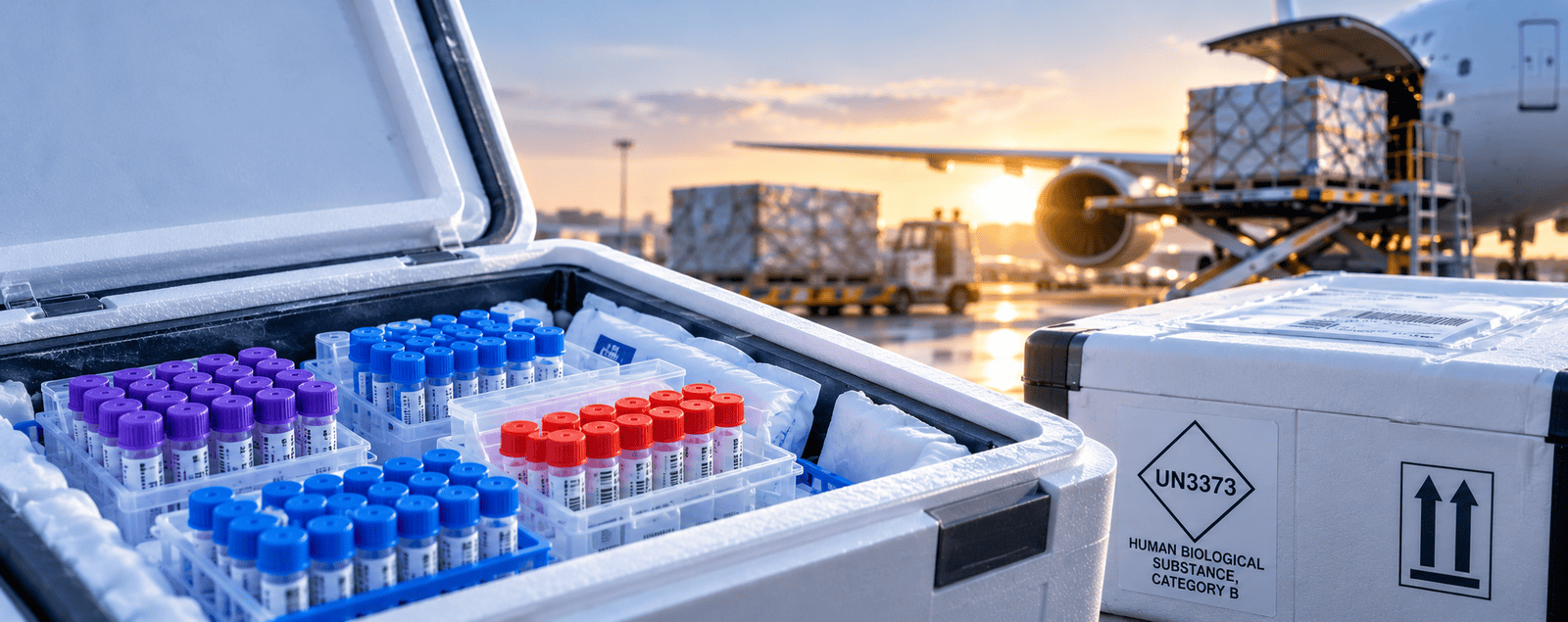
In biomedical research, a biospecimen can travel through several stages before reaching the laboratory where it will ultimately be analyzed. It may be collected at a hospital, processed by a clinical team, temporarily stored at a collection facility, transferred to a logistics partner, cleared through customs, and finally received by a researcher.
Throughout this journey, one factor can have a significant influence on the scientific value of the specimen: temperature management.
Yet, cold-chain management is often misunderstood as simply keeping samples cold.
In reality, it is a coordinated process involving specimen-specific requirements, processing timelines, validated packaging, storage conditions, transportation planning, and documented handling procedures.
Maintaining the correct temperature is important. Maintaining the right conditions throughout the entire journey is what makes the difference.
1. Why Temperature Control Matters in Biospecimen Research
Human biospecimens are biologically complex materials. Their composition and stability can change depending on how they are collected, processed, stored, and transported.
Temperature fluctuations may affect the stability of certain proteins, nucleic acids, cellular components, and other analytes. The extent of that impact depends on the specimen type, the intended analytical application, and the conditions to which the material is exposed.
For example, requirements for fresh tissue intended for molecular analysis may differ significantly from those for frozen tissue, serum, plasma, or viable cellular specimens.
This is why temperature requirements should never be determined by convenience alone.
They should be established according to the study protocol, specimen characteristics, analytical requirements, and applicable handling procedures.
2. One Temperature Does Not Fit Every Specimen
A common misconception is that all biological materials can be managed using the same temperature range.
In practice, different specimens may require ambient, refrigerated, frozen, or cryogenic conditions, depending on their intended use.
Consider a few examples:
● Serum and plasma: Storage and transportation requirements depend on the analytes of interest, processing conditions, and study specifications.
● Fresh tissue: Time from collection to processing, preservation method, and temperature exposure can influence downstream analytical results.
● Fresh-frozen tissue: Maintaining the required frozen conditions helps preserve specimen characteristics relevant to the intended application.
● PBMCs and other cellular specimens: Processing timelines, freezing procedures, cryopreservation media, and storage conditions can be critical to cell recovery and viability.
● Specialized biological materials: Some projects require customized containers, specific transport media, or handling arrangements designed around the material's physical and biological characteristics.
The central principle is straightforward: the cold chain must be designed around the specimen, not the other way around.
3. The Journey Before Shipment Is Just as Important
Cold-chain discussions often focus on transportation. However, temperature management begins well before a package is collected by a courier.
The pre-analytical phase can influence the quality of a biospecimen long before it enters a shipping container.
Important considerations include:
● Time between collection and processing
● Centrifugation and aliquoting requirements
● Initial storage conditions
● Container compatibility
● Sample identification and labeling
● Documentation of processing and storage
● Preparation of the shipment before dispatch
If a specimen is exposed to unsuitable conditions before packaging, subsequent transportation under the correct temperature cannot necessarily reverse the effects.
This is why cold-chain management must be integrated into the collection and processing workflow rather than treated as an isolated logistics activity.
4. Packaging Is an Operational Decision, Not a Standardized Afterthought
Packaging biological materials requires more than selecting an insulated box.
The packaging configuration must account for the specimen type, required temperature range, shipment duration, expected transit conditions, container size, and applicable transport regulations.
Depending on the project, this may involve cryovials, specialized tubes, glass containers, larger-volume bottles, customized transport media, or other fit-for-purpose arrangements.
The packaging system must also protect against foreseeable physical risks, including leakage, breakage, movement, and handling during transit.
For international shipments, these considerations must be coordinated with the applicable requirements for classification, labeling, documentation, and packaging of biological materials.
A well-planned shipment begins with a clear understanding of what is being transported, why it is being transported, and what conditions must be maintained until delivery.
5. Temperature Monitoring and Documentation
A shipment may arrive with its outer packaging intact and still require careful evaluation before the specimen is accepted for research use.
Temperature monitoring can provide valuable information about the conditions experienced during transportation. Depending on the study requirements, this may include the use of temperature data loggers or other appropriate monitoring systems.
Documentation should make it possible to evaluate relevant stages of the specimen's journey, including dispatch conditions, monitoring records, delivery time, and any identified deviations.
When a temperature excursion or other shipment issue occurs, the response should be documented and assessed according to established procedures.
The appropriate disposition of an affected specimen depends on the nature and duration of the excursion, the specimen type, the analytical application, and the study's acceptance criteria.
A temperature deviation should never be dismissed simply because the specimen appears normal on arrival.
6. International Shipping Adds Another Layer of Complexity
Cross-border transportation introduces variables that may be difficult to predict precisely.
Customs inspections, incomplete documentation, flight changes, weather disruptions, missed connections, and unexpected transit delays can all affect delivery timelines.
For temperature-sensitive biospecimens, these challenges make advance planning especially important.
Effective preparation may include:
● Confirming import and export requirements before dispatch
● Reviewing the completeness and accuracy of shipping documentation
● Selecting an appropriate transport route
● Coordinating collection times with courier pickup schedules
● Assessing the suitability of packaging for the expected transit duration
● Establishing contingency arrangements where appropriate
● Communicating with the receiving laboratory before delivery
These measures cannot eliminate every disruption, but they can reduce avoidable risks and help teams respond more effectively when unexpected events occur.
7. The Importance of Cross-Functional Coordination
Cold-chain performance is not the responsibility of a single team.
It depends on coordination between collection personnel, laboratory teams, clinical operations, quality functions, shipping specialists, customs partners, and the receiving organization.
Each participant contributes to a different stage of the process.
Collection teams must follow the appropriate protocol. Laboratory personnel must process and prepare specimens correctly. Logistics teams must use suitable packaging and transportation arrangements. Receiving teams must understand the expected delivery conditions and acceptance requirements.
When these responsibilities are clearly defined, the likelihood of preventable errors can be reduced.
When communication breaks down, even a technically appropriate packaging system may not be enough to protect the specimen.
8. How Vector BioSource Approaches Temperature-Controlled Logistics
At Vector BioSource, biospecimen logistics requires coordination between collection requirements, packaging arrangements, documentation, and international transportation.
Our Clinical Affairs team oversees shipment coordination from pickup through handover at the destination, working with relevant collection partners and logistics providers to support the requirements of each project.
This includes reviewing shipping documentation, coordinating appropriate packaging arrangements, aligning shipment preparation with temperature requirements, and supporting customs clearance processes.
Our experience with different specimen formats and transportation requirements reinforces an important operational lesson: every shipment must be planned according to its specific requirements.
A standard shipment configuration may be appropriate for one project but unsuitable for another.
The objective is to align the packaging, handling, documentation, and transportation plan with the material being shipped and the requirements agreed upon for the study.
9. From Temperature Control to Scientific Confidence
Cold-chain management ultimately supports a larger objective: confidence in the biological material used for research.
Researchers need to understand not only what specimen they have received, but also whether its collection, processing, storage, and transportation history is appropriate for the intended application.
This is particularly important in biomarker research, diagnostic assay development, molecular analysis, cellular studies, and other applications where pre-analytical variables can influence results.
A robust cold-chain process supports consistent handling and provides documented information that helps research teams assess specimen suitability.
It does not guarantee a particular analytical outcome, but it helps control important variables that could otherwise compromise interpretation.
Looking Ahead
As global research programs become more complex, biospecimen transportation will increasingly require coordination between scientific requirements and operational execution.
The challenge is not simply to move biological material from one location to another. It is to preserve the conditions required for that material to remain suitable for its intended research purpose.
That requires planning before collection, discipline during processing, appropriate packaging, reliable logistics coordination, and documentation throughout the journey.
At Vector BioSource, we recognize that every stage of the biospecimen lifecycle contributes to its ultimate research value.
Final Thought
Cold-chain management is not just about keeping specimens cold. It is about protecting the conditions that make them scientifically useful.
From collection and processing to storage, transportation, and final delivery, every stage deserves careful consideration.
Because in biomedical research, reliable science depends not only on obtaining the right specimen, but also on preserving its integrity throughout the journey.
- Roshan Patil
Director of Clinical Affairs | Vector BioSource Inc.