
From Clinic to Researcher: Why Chain of Custody Matters
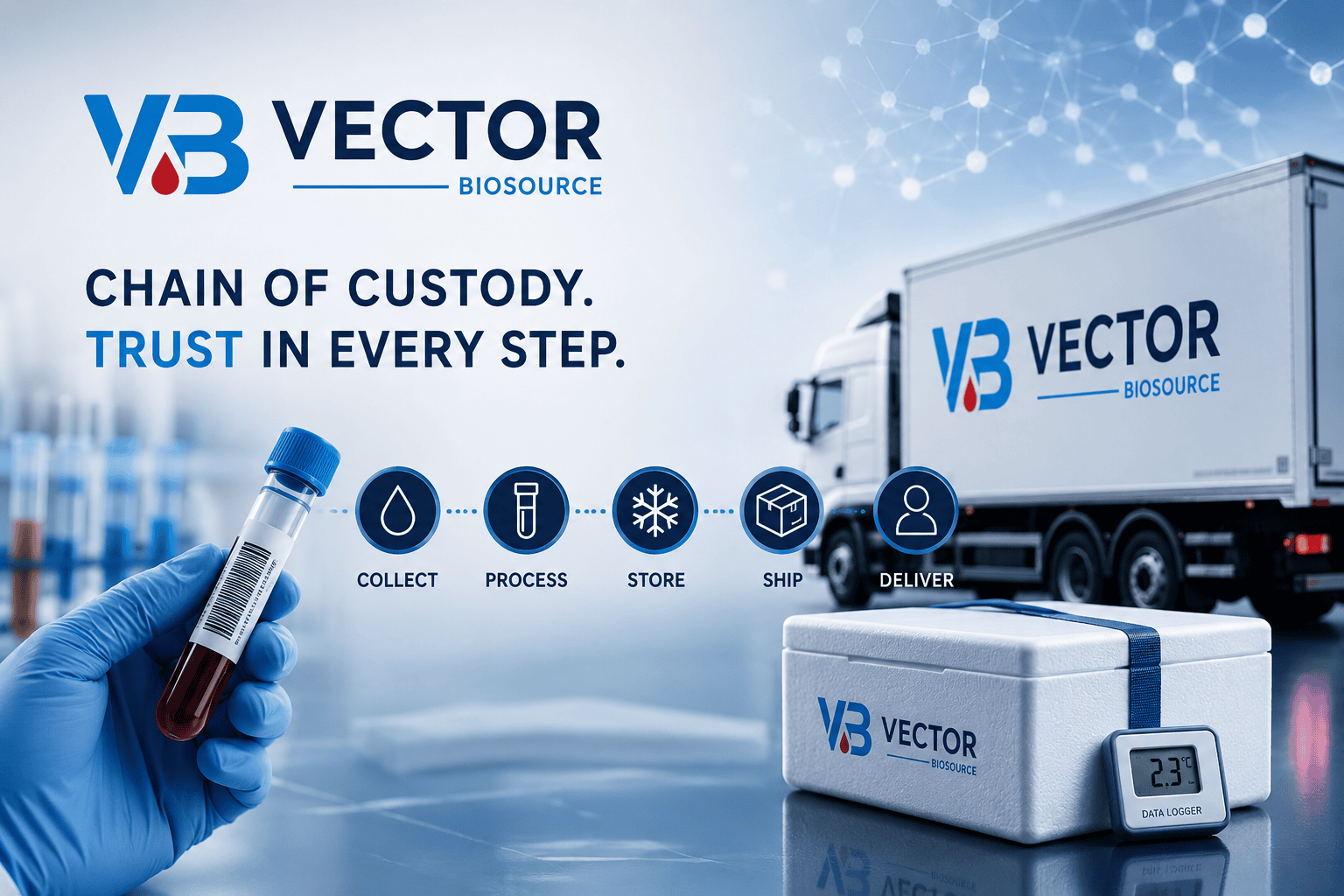
In biospecimen-based research, data accuracy is everything. But behind every dataset, every assay, and every diagnostic validation lies something often overlooked: the journey of the sample itself.
This journey is defined by one critical concept - chain of custody.
It is not just a process. It is the foundation of trust in biospecimen science.
What Is Chain of Custody?
Chain of custody refers to the complete, documented history of a biospecimen from the moment it is collected to the moment it is used in research.
This includes:
● How the sample was collected
● When and how it was processed
● Storage conditions and duration
● Every individual or team that handled it
● Transportation conditions and timelines
Every step matters - because every step has the potential to impact the integrity of the sample.
Why It Matters More Than Ever
As diagnostics, AI-driven models, and precision medicine continue to advance, the demand for high-integrity biospecimens has increased significantly.
Without proper chain of custody:
● Data may become unreliable
● Results may not be reproducible
● Regulatory approvals may be delayed
● Entire studies can be questioned
In short, weak traceability leads to weak science.
The Risk of Gaps in the Process
In a fragmented global sourcing environment, gaps in documentation and handling are common. These gaps can include:
● Missing or incomplete collection records
● Inconsistent processing protocols
● Lack of temperature tracking during storage or transit
● Poor documentation of handling steps
Even if the sample appears intact, missing information can make it unsuitable for research or regulatory use.
Vector BioSource’s Approach
At Vector BioSource, chain of custody is not treated as a formality - it is built into every stage of our workflow.
We ensure full traceability by:
● Working only with vetted clinical partners who follow defined protocols
● Standardizing documentation requirements across all collection sites
● Recording detailed handling, processing, and storage information
● Implementing controlled labeling and tracking systems
● Aligning logistics processes with documentation for end-to-end visibility
Every biospecimen we deliver is supported by a clear, traceable, and verifiable history.
Standardization Drives Confidence
Consistency is key to maintaining a chain of custody. That’s why we focus on:
● Defined SOPs across sourcing partners
● Uniform documentation templates
● Clear communication before collection begins
● Alignment between clinical, operational, and logistics teams
This ensures that every sample - regardless of origin - meets the same research-grade expectations.
Chain of Custody and Regulatory Readiness
For many of our clients, biospecimens are not just for research - they are part of regulated processes, including:
● Diagnostic validation
● Clinical trials
● Regulatory submissions
In these cases, chain of custody becomes even more critical. Proper documentation and traceability support compliance with regulatory bodies and provide confidence in the data generated.
The Bigger Picture
In biospecimen sourcing, quality is not just about the sample itself - it is about everything that happened to the sample before it reached the lab.
Chain of custody transforms a biological material into a scientifically reliable asset.
Final Thought
A biospecimen without traceability is just a sample. A biospecimen with a full chain of custody is trusted science.
At Vector BioSource, we ensure that every sample carries not just biological value - but a complete, transparent, and reliable story.
- Roshan Patil
Director of Clinical Affairs | Vector BioSource Inc.